

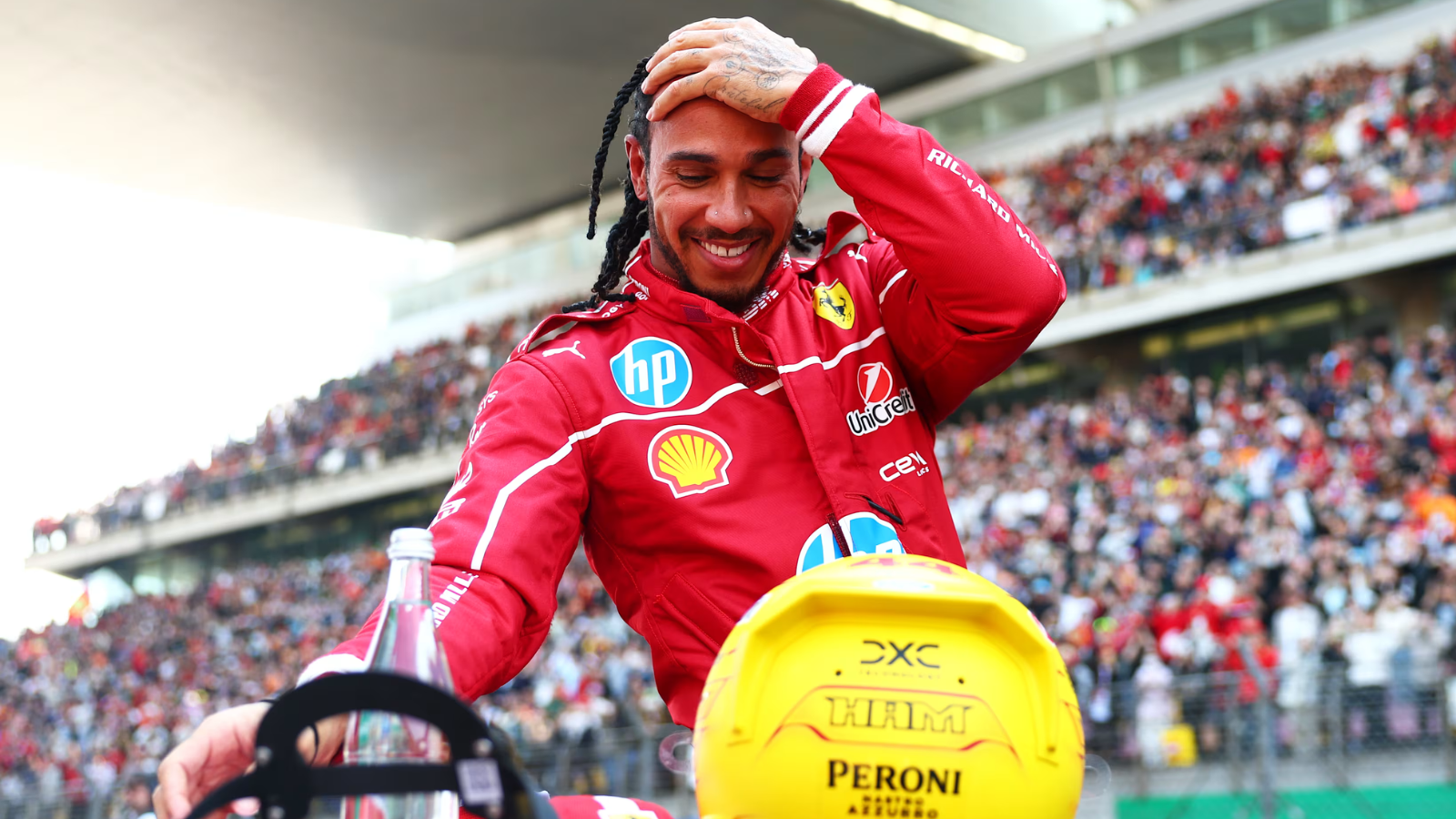
Formula One’s most significant driver transfer in decades landed when Lewis Hamilton confirmed his move from Mercedes to Scuderia Ferrari — a decision that restructured the competitive conversation across the entire grid and gave the sport a storyline that transcends race results. A seven-time world champion joining the most storied constructor in F1 history at the stage of his career when most drivers are considering retirement created questions that the sport has been debating ever since the announcement. Whether the partnership delivers the success both parties seek determines a significant portion of what the current F1 era is remembered for. Fans following F1 racing across every circuit can find dedicated markets at Dbbet.
Lewis Hamilton: The Greatest of His Generation
Lewis Hamilton arrives at Ferrari carrying a statistical record that makes any objective greatest-of-all-time conversation in Formula One genuinely complicated. Seven World Drivers’ Championships — matching Michael Schumacher’s record. The all-time lead in race victories. The all-time lead in pole positions. Records across virtually every meaningful F1 metric accumulated across a career that began with McLaren, delivered sustained dominance with Mercedes, and now enters its most emotionally charged chapter in Maranello. What makes Hamilton’s career remarkable beyond the numbers is its consistency across different competitive contexts — his ability to extract maximum performance from machinery that was not always the outright fastest in the field demonstrates racing intelligence and competitive adaptability that pure statistics cannot fully capture.
Lewis Hamilton Ferrari: What the Partnership Means
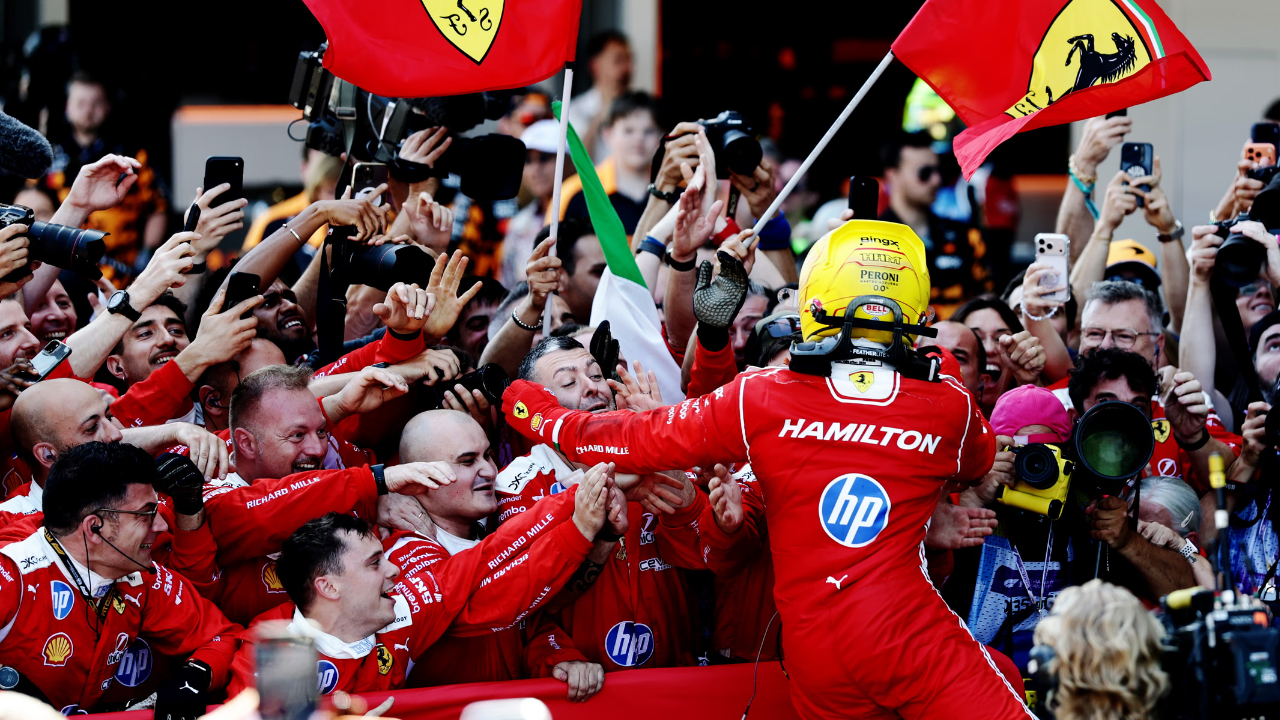
Lewis Hamilton Ferrari is a combination that F1 fans had discussed hypothetically for years before it became reality — the sport’s most successful active driver joining the constructor whose history and mythology exceed every other team in the paddock. Ferrari’s emotional significance in Formula One is unlike anything else in motorsport — the Scuderia carries the weight of Italian national identity, decades of championship success, and a passionate global fanbase whose expectations create pressure that Hamilton will experience differently from anything Mercedes provided. The partnership’s appeal is narratively irresistible: a driver with nothing left to prove statistically joining a team desperate to end their constructors’ championship drought and deliver a drivers’ title for the first time in nearly two decades. Whether the machinery meets the ambition determines everything.
Scuderia Ferrari: The History Behind the Prancing Horse
Scuderia Ferrari is Formula One’s founding constructor and its most emotionally loaded competitive entity. Founded by Enzo Ferrari — a figure whose complexity and obsession with racing created an organizational culture that persists decades after his death — the team has won more constructors’ championships than any rival across F1’s history. The Maranello factory, the red cars, the tifosi in the grandstands at Monza — Ferrari is Formula One in a way that no other constructor can claim. The team’s recent history has been defined by the gap between expectation and delivery: cars that showed genuine pace across qualifying sessions but converted it into race victories less consistently than Mercedes or Red Bull. Hamilton’s arrival represents both an injection of proven championship-winning mentality and the highest-profile statement of intent the team has made in the modern era.
Read More: SERP Insight Guest Post: Does It Actually Work in 2026?
Max Verstappen: The Reigning Standard
Any discussion of F1 racers to watch begins with Max Verstappen — the driver whose dominance across recent seasons has redefined what championship-winning performance looks like in the modern era. Verstappen’s four consecutive world championships with Red Bull Racing demonstrated a combination of raw pace, strategic intelligence, and psychological composure under pressure that has drawn comparison to the sport’s all-time greats. His ability to manage tire degradation across long stints, to extract performance from a car that is not always operating at its mechanical peak, and to make decisive overtaking moves in situations where caution would be rational makes him the benchmark against which every rival — including Hamilton at Ferrari — will be measured. Whether Verstappen’s Red Bull can maintain the car advantage that supported his championship streak as Ferrari and Mercedes close the development gap determines much of the grid’s competitive narrative.
Charles Leclerc: Hamilton’s Ferrari Teammate
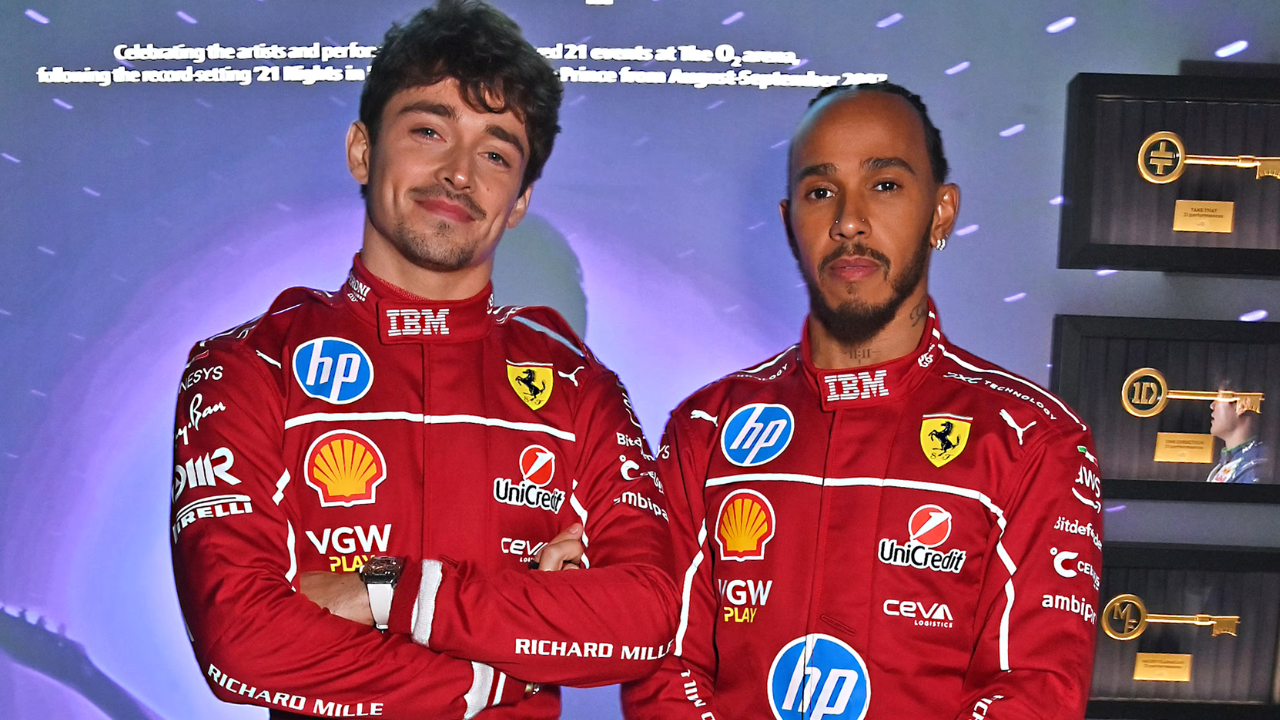
The internal Ferrari dynamic between Hamilton and Charles Leclerc represents one of the current season’s most compelling subplots. Leclerc has established himself as one of the sport’s most naturally gifted qualifiers — his ability to find the limit of a Ferrari in a single lap is genuinely exceptional — and his investment in the team after years of being its primary championship hope creates a situation where the arrival of Hamilton produces competitive tension that Ferrari’s management must navigate with considerable care. Two drivers of this quality sharing the same machinery, the same strategic calls, and the same championship ambitions within a team whose history of internal driver politics is extensively documented creates conditions where the partnership’s management will be as closely watched as the racing itself. How Ferrari balances the relationship across a full season defines the team’s internal culture.
George Russell and Mercedes’ Response
George Russell’s position at Mercedes following Hamilton’s departure placed him as the undisputed team leader of a constructor that will spend the current era attempting to demonstrate that its recent success was organizational rather than Hamilton-dependent. Russell’s development into a race winner and consistent points scorer has been evident across his Mercedes tenure — his analytical approach to car setup and his measured race management reflect the technical intelligence that Mercedes values. The team’s response to Hamilton’s departure — both in driver acquisition and in how it has structured Russell’s role within the team — reveals organizational priorities that will determine whether Mercedes remains a championship-winning constructor or enters a transitional period while Ferrari and Red Bull dominate the front row conversation.
Lando Norris and McLaren’s Resurgence
McLaren’s competitive resurgence has made Lando Norris one of the most watched drivers in the current field — a talent whose natural speed was always visible but whose championship ambitions required machinery capable of supporting them. The Woking constructor’s return to race-winning and podium-challenging form has transformed Norris from a driver associated with impressive performances in uncompetitive equipment into a genuine championship contender whose ceiling in a fully developed McLaren is still being established. His aggressive overtaking, his comfort in wheel-to-wheel racing situations, and his obvious enjoyment of high-pressure competitive moments make him entertaining across every circuit type. The development trajectory of McLaren’s car across the season determines whether Norris enters the title conversation or remains a race-winner-level threat without the consistency required to challenge across a full championship.
Fernando Alonso: The Veteran Who Refuses to Fade
Fernando Alonso’s continued presence at the front of the F1 grid at an age when most drivers have long concluded their careers makes him simultaneously an inspiration and a competitive puzzle. Two world championships, legendary wheel-to-wheel battles, and a reputation for extracting more from his machinery than any reasonable engineering assessment would predict — Alonso’s career has been defined by talent that exceeded the equipment it was given for extended periods. His Aston Martin tenure has produced moments that reminded the paddock that his speed has not meaningfully diminished, even as the car’s development trajectory has not consistently matched his ambitions. Watching Alonso compete against Hamilton at Ferrari — two drivers whose careers have intersected since Hamilton’s 2007 debut — adds a historical dimension to races that younger driver matchups cannot replicate.
The Championship Picture and What Hamilton’s Ferrari Challenge Needs
Hamilton’s championship ambitions at Ferrari depend on variables that his talent alone cannot control — the car’s competitive positioning relative to Red Bull and McLaren across the development war that determines each season’s fastest package. A Ferrari that qualifies consistently in the front row and converts that pace into race victories through strategic and mechanical reliability gives Hamilton the platform his ability deserves. A Ferrari that shows qualifying pace without race-day conversion — the pattern that frustrated Leclerc across previous seasons — would represent a familiar and deeply frustrating outcome for a driver who has spent his entire career maximizing what his machinery provides. The early season data points will establish whether the Hamilton-Ferrari project is a genuine championship threat or a compelling narrative that the competitive realities of modern Formula One prevent from reaching its most satisfying conclusion.
Read Also: Table Tennis World Tour: The Biggest Matches and Rising Stars to Watch
