

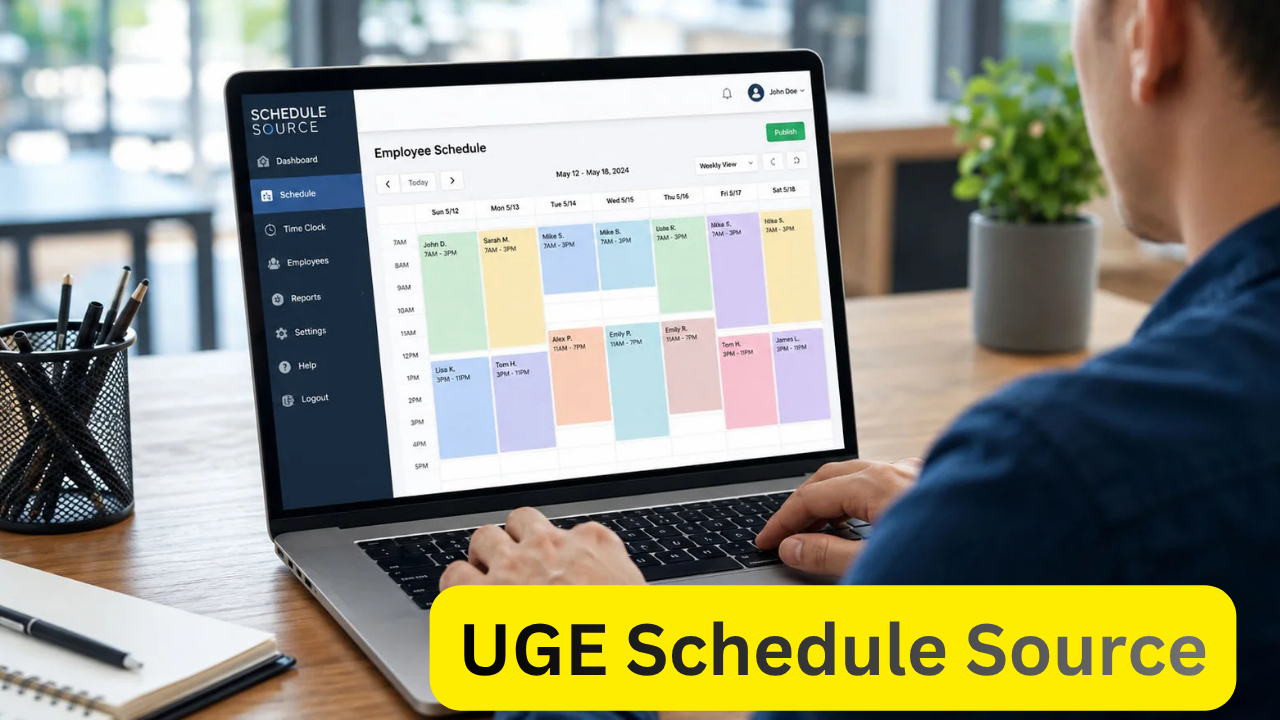
Running a big team across multiple locations is a headache. Shifts change. People call in sick. Labor laws keep getting tighter. You need something that actually keeps up.
That’s where UGE Schedule Source comes in. It’s been around for a while now — mostly used by airlines, ground handling crews, and other operations where scheduling gets messy. But does it still hold up in 2026? Let’s find out this thing in detail below in the content.
What UGE Schedule Source Actually Is
It’s a cloud-based tool for scheduling, time tracking, and managing leave. Everything lives in one place. The engine running it is called the Universal Grid Engine (UGE). Basically, the brain that crunches all the complicated stuff like labor rules, availability, and last-minute changes.
Here’s what it does:
- Predicts staffing needs using past data and seasonal trends
- Enforces labor rules automatically — union agreements, overtime caps, break laws, you name it
- Adjusts schedules on the fly when things go sideways
Why People Still Use It
Two big reasons: compliance and employee control.
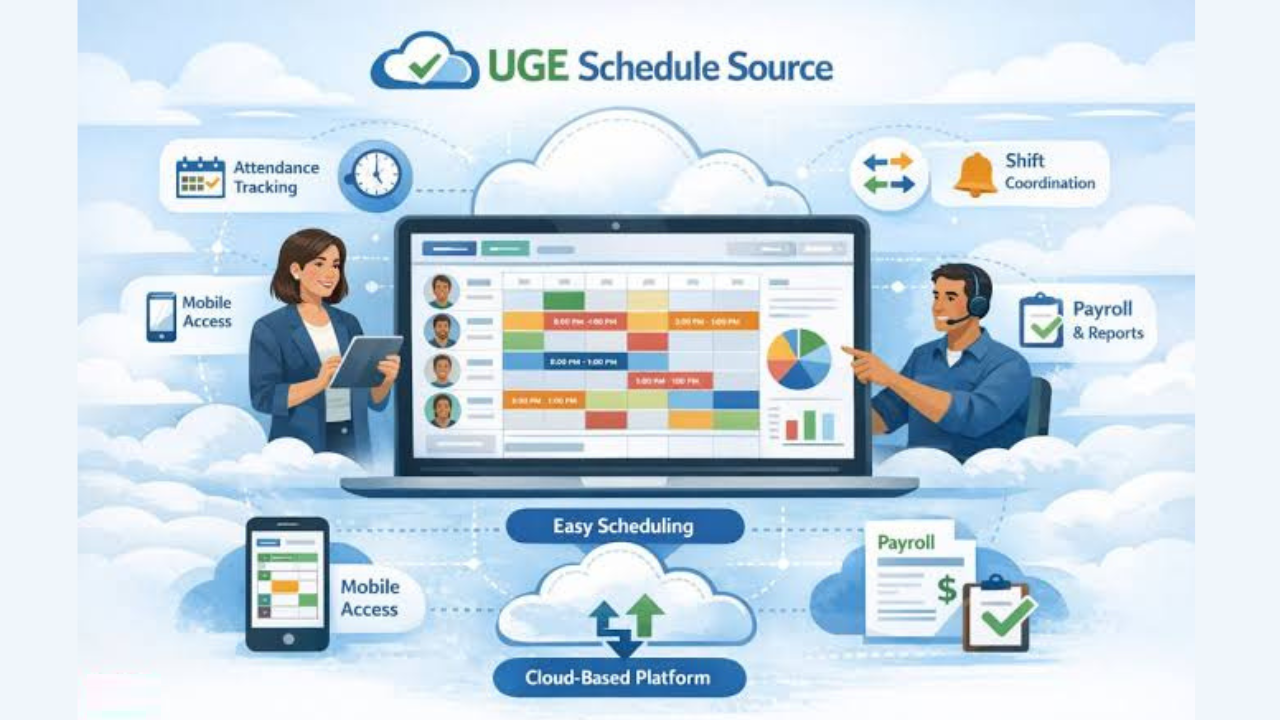
Labor violations cost a fortune. UGE generates audit-ready docs for every shift. The inspector shows up? You’re covered.
Employees get a mobile app. They can check shifts, request time off, swap with coworkers, and even bid on open slots. No more chasing down a manager for every little thing.
Pricing
| Plan | Cost | Who It’s For |
| Premium | $10/month | Small to mid-sized teams |
| Enterprise | Custom quote | Large operations |
Read Also: Redeepseek com: Quick and Smarter AI-Powered Search Solutions
How to Log In
Getting into the UGE Schedule Source portal is pretty straightforward. Here’s how it works.
First, open your browser and head to www.schedulesource.com. That’s the main login page. Your HR team should have already set up your account and handed over your username and password. If you haven’t got those yet, reach out to them, they handle all the credential stuff.
Once you’re on the site, punch in your details and hit sign in. The dashboard loads up and you can see your shifts, request time off, or swap with a coworker right away.
Some companies don’t use the standard portal, though. Bigger operations sometimes run their own branded version of the system, same backend, just wrapped in their own company look and feel. If that’s your situation, your HR team will give you a different web address to use. Same login process, just a different URL.
Forgot your password? There’s a reset link on the login page. Click it, enter your email, and follow the instructions. If that doesn’t work, HR can reset it for you manually.
The mobile app works the same way. Download the UGE Schedule Source app, enter the same username and password, and you’re in. Some folks actually prefer the app — it’s faster for checking shifts on the go or picking up open slots when you want extra hours.
One thing to keep in mind: if you’re logging in from a new device or location, the system might ask for extra verification. That’s just a security step. Follow the prompts and you’ll be fine.
If the site is down or loading slowly, don’t panic. It happens sometimes. Try refreshing the page or clearing your browser cache. Still not working? Check with a coworker. If they can’t get in either, it’s probably a system-wide issue, and IT is already on it.
How It Stacks Up Against Competitors
| UGE Schedule Source | UKG Ready | Runn | |
| Best for | Complex shift work, multiple locations | Big enterprise HR & payroll | IT services, project scheduling |
| Price | $10/month | Custom pricing | Custom / free tier |
| Biggest strength | Universal Grid Engine handles complex rules | Everything HR in one ecosystem | Visual, easy resource planning |
| Compliance | Built-in, audit-ready | Alerts built-in | Basic tracking |
| Mobile app | Yes | Yes | Limited |

3 Alternatives Worth Looking At
Connecteam: $29 to $99/month for the first 30 users. Does scheduling, time clock, and team chat. Mobile works great. Downside: constant nudges to upgrade.
Deputy: $4.50/user/month for scheduling. Clean interface, good support. Not great if you need full HR features.
Sling: Free basic plan, premium from $1.70/user/month. Cheap and simple. Shift swapping is solid. Doesn’t play nice with many third-party tools, though.
What Real Users Say
The reviews are pretty clear — if your scheduling is simple, this tool is overkill. But if you’re juggling rotating shifts, union rules, and multiple locations? Nothing else really comes close. Yeah, it takes time to learn. That’s the price of having something this powerful.
Where It’s Headed
AI is the next big thing. Soon these systems will predict staffing needs using weather, local events, sales history — the works. UGE is already building that into its architecture. Early adopters won’t get caught off guard.
Final Word
Let’s be real, UGE Schedule Source is overkill if you’re a small shop with five employees and fixed shifts. You don’t need a rocket launcher to swat a fly. Tools like Sling or Deputy will handle that just fine, and you’ll save some money, too.
But if your world involves rotating shifts, union contracts, multiple locations, and constant last-minute changes? This is where UGE shines. Nothing else really matches it. The learning curve is steep, sure. You’ll spend time getting your team up to speed. Once it’s running, though, it pays for itself — fewer compliance headaches, less manual scheduling work, and happier employees who can actually manage their own shifts from their phones. For big operations in 2026, it’s still a solid bet.
FAQs
1. How do I access my schedule?
Answer: Visit www.schedulesource.com. HR gives you the login.
2. What is TeamWork by ScheduleSource?
Answer: That’s the official name for the UGE Schedule Source platform.
3. Is there a mobile app?
Answer: Yes. View shifts, request time off, swap shifts — all from your phone.
4. How does it help with labor compliance?
Answer: Automatically enforces labor laws, blocks illegal shifts, and keeps audit records.
5. Can it connect to my payroll system?
Answer: Yes. Open API for custom integrations. Works with most payroll and HR databases.
Read More: Loaf with a Chocolate Swirl: What the NYT Crossword Is Actually Talking About
