

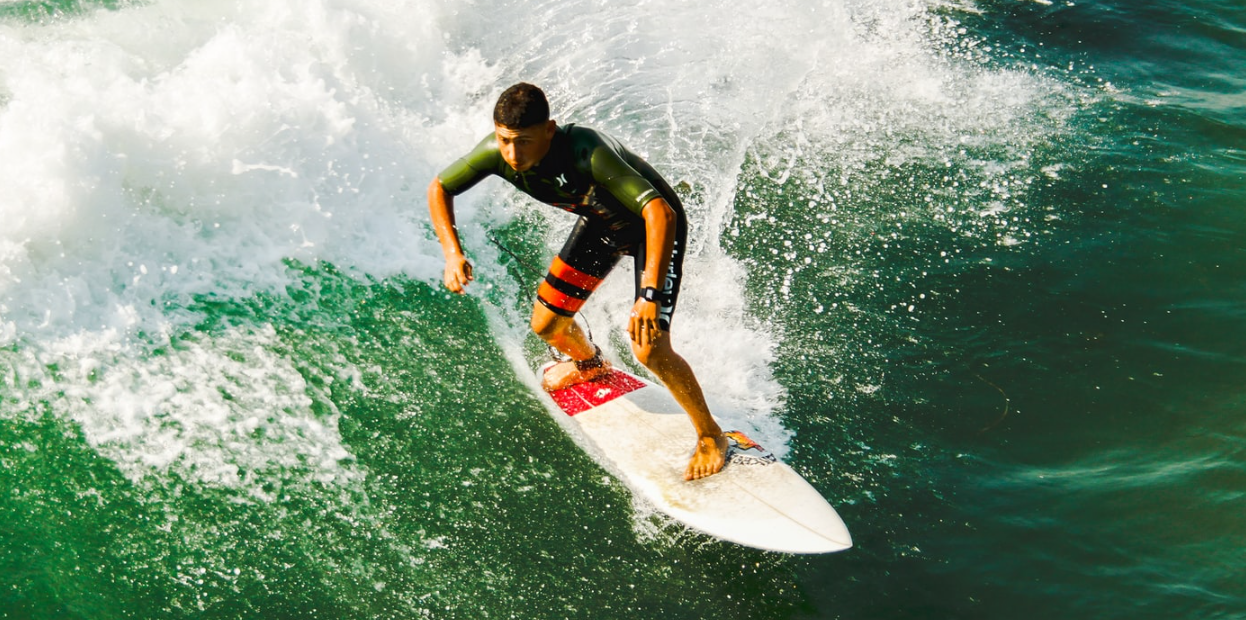
Some sports reveal their difficulty immediately — the moment a beginner attempts their first action, the gap between watching and doing becomes instantly and humiliatingly apparent. Surfing belongs to this category with particular completeness. The surfers visible from any beach — gliding effortlessly across moving water, adjusting body weight through subtle shifts that produce fluid directional changes — appear to be doing something almost passive. Getting on a board and attempting to replicate that apparent ease reveals the truth with immediate and memorable physical clarity.
dbbet uz follows action sports with genuine analytical interest — recognizing that understanding is surfing hard, how to surf effectively, and what mastering how to surf ocean waves actually requires provides essential context for anyone approaching one of the world’s most culturally distinctive and physically demanding athletic disciplines for the first time.
Why Surfing Fascinates
Before examining difficulty and technique, understanding surfing’s specific cultural magnetism helps explain why millions of people worldwide commit to learning a skill whose difficulty curve is genuinely steep and whose practice requires specific geographic access that most sports don’t demand as prerequisite for participation.
Surfing’s appeal operates across multiple simultaneous dimensions. The natural environment — ocean, sunlight, the specific sensory experience of moving water — creates an aesthetic context that gymnasium sports and field sports don’t approach equivalently. The wave itself as competitive partner rather than passive surface creates an improvised quality that scripted sport environments never generate. And the specific sensation of successfully riding a wave — the momentum, the balance, the brief feeling of harnessing something genuinely powerful — creates an experience whose addictive quality longtime surfers describe as unlike anything else physical activity provides.
This experiential reward explains why surfers accept learning curves that would discourage participation in sports offering more immediate gratification. The feeling when things work correctly is worth the extensive frustration that precedes it.
Is Surfing Hard? The Honest Answer
The honest answer to is surfing hard is yes — more difficult than its practitioners make it appear and more complex than its apparent simplicity suggests. Surfing combines multiple athletic demands that most sports address individually — balance, water reading, physical conditioning, timing, and the specific psychological composure that performing in dynamic, unpredictable natural environments requires — into a single activity that must coordinate all these elements simultaneously.
Beginner surfers face a specific challenge that makes early learning particularly frustrating — every element they’re attempting to develop feels interconnected in ways that practicing components independently doesn’t resolve. Improved paddling doesn’t help if pop-up timing is wrong. Perfect pop-up technique doesn’t matter if wave selection places beginners in sections that close out before they can establish any riding position. Everything must develop together before the whole experience begins making sense.
Reasonable beginner timelines suggest that standing and riding waves consistently requires approximately ten to fifteen hours of dedicated water time for average athletic adults — longer than most beginners anticipate, shorter than the difficulty of early attempts suggests will ever be achievable.
Understanding Ocean Waves 🌊
Learning how to surf ocean waves requires engaging seriously with wave formation and behavior before any board contact occurs — the ocean’s specific dynamics creating the moving platform that surfing exploits in ways that understanding transforms from chaotic environment into readable competitive resource.
Waves form through wind energy transferred to ocean surface water across distances called fetch — larger fetch producing more organized, powerful waves that surfing destinations prize. The specific quality called groundswell — organized wave energy that has traveled long distances, shedding chaotic wind chop to arrive as clean, predictable lines — creates the surfing conditions that beaches become famous for and surfers organize travel around.
As waves approach shore, decreasing depth causes the circular water motion within waves to compress — the wave slows at its base while its crest continues forward, eventually creating the breaking that produces rideable surf. This breaking pattern — whether waves break left, right, gradually, or suddenly — determines what maneuvers are possible and how much time riders have to execute them.
Equipment: Choosing the Right Board 🏄
Understanding how to surf begins with equipment selection whose importance beginners consistently underestimate — the specific board dimensions affecting learning speed more dramatically than any other single decision made before water entry.
Longboards and foam boards — wider, longer, and more buoyant than the performance shortboards that experienced surfers use — provide the stability that learning fundamental balance requires. Buoyancy determines how easily paddling generates wave-catching speed and how forgivingly boards respond to weight distribution errors that beginners make frequently during early attempts.
Shortboards whose narrow profiles and reduced volume appeal aesthetically don’t provide the stable platform that learning fundamental skills requires — beginners attempting shortboard learning extending their progression timelines by months while fighting equipment limitations that appropriate beginner boards eliminate. The temporary aesthetic compromise of learning on larger, less glamorous equipment is the most efficient investment a beginning surfer makes.
Fins — the stabilizing structures on board undersides — significantly affect how boards respond to rider inputs. Standard three-fin configurations provide the balance between stability and maneuverability that learning benefits from, while more advanced fin configurations optimize for performance characteristics that beginners cannot access or appreciate until fundamental skills are established.
How to Surf: The Pop-Up Technique
The pop-up — transitioning from prone paddling position to standing riding stance in a single explosive movement — is surfing’s most fundamental technical skill whose quality determines everything that subsequently becomes possible. Performing this movement correctly under the specific physical demands of a moving wave requires practice repetition that makes the movement automatic rather than consciously executed during the brief window that wave timing allows.
The movement sequence involves pushing up with both hands simultaneously while bringing feet forward in a single coordinated motion — front foot positioned between the hands’ shoulder-width placement, back foot positioned over the fins for stability. The resulting stance places feet roughly shoulder-width apart, knees bent, arms extended for balance, and body weight slightly forward to maintain speed.
Common beginner pop-up errors include getting up too slowly through sequential movement rather than single explosive action, placing feet incorrectly creating immediate balance problems, and standing too upright rather than maintaining the knee-bend that provides the dynamic balance adjustment capability that riding requires continuously.
Paddling: The Foundation Everything Builds On 💪
Efficient paddling — the physical action that generates wave-catching speed and positions surfers in appropriate takeoff locations — demands more specific technique than its apparent simplicity suggests. Beginning surfers who paddle inefficiently exhaust themselves before catching waves consistently, creating fatigue that compounds every subsequent technical error.
Proper paddling position places the body centered on the board — too far forward causes nose-diving, too far back creates drag that reduces paddling efficiency dramatically. Arms enter water at full extension, pulling through with cupped hands in high-elbow technique that maximizes water purchase per stroke. The head remains elevated rather than face-down — allowing environmental awareness that ocean conditions require continuously.
Reading takeoff timing — beginning paddling early enough to match wave speed before it arrives, maintaining stroke commitment through the initial acceleration phase that beginners often abandon too early — requires developing the specific environmental reading that experience progressively builds across repeated wave attempts.
Reading Waves: The Skill That Takes Longest 🔍
Among all the elements that how to surf competently requires developing, wave reading — the ability to identify which waves are worth catching, where along the wave to position for optimal takeoffs, and how the wave will break across the following seconds — takes the longest to develop and produces the most significant performance improvements once genuinely acquired.
Wave reading begins with understanding sets — groups of larger waves that arrive periodically between smaller or more irregular waves — and the specific interval timing that allows positioning in appropriate locations when quality waves arrive rather than being caught inside when larger sets break. Experienced surfers read approaching swells with minutes of advance awareness that beginners don’t initially possess.
Positioning along the wave determines the riding quality available — takeoffs too deep in the peak creating steep, difficult entries while too far along the shoulder offers slower, gentler access but less powerful riding. Finding the specific positioning that maximizes both takeoff success and subsequent riding quality represents the intermediate challenge that moves surfers beyond simply catching waves toward riding them effectively.
Ocean Safety: Non-Negotiable Knowledge 🚨
Learning how to surf ocean waves without understanding ocean safety creates risks that enthusiasm and physical confidence don’t mitigate. Rip currents — concentrated water flows moving away from shore through gaps in breaking waves — are the ocean hazard that most frequently affects swimmers and surfers whose unfamiliarity leads to exhaustion-creating panic responses rather than the diagonal swimming that efficiently escapes their flow.
Surfboard leashes — the cord connecting ankle to board — prevent boards from traveling significant distances after wipeouts but create specific entanglement risks in heavy surf that surfers must understand before attempting waves whose power creates genuinely dangerous wipeout scenarios.
Surf etiquette — the informal priority rules governing which surfer has rights to specific waves — isn’t merely social convention but genuine safety infrastructure. Dropping in on other surfers creates collision risks whose consequences in shallow water near reef or rocky bottoms can be seriously injurious regardless of how experienced or careful individual surfers are.
Progression: What Comes After Standing
Successfully standing and riding waves consistently represents surfing’s first achievement milestone — a moment that typically arrives after the ten-to-fifteen hour beginner timeline and creates the platform from which genuine progression toward intermediate and eventually advanced surfing becomes possible.
Turning — the ability to redirect boards along wave faces through weight shifts and rail engagement — represents the first intermediate skill that opens surfing’s full experiential potential. Without turning capability, surfers ride straight to shore and exit the wave — completing the basic action but missing the wave-riding interaction that distinguishes surfing from mere wave-assisted transportation toward the beach.
The path from standing to competent turning to genuine wave-riding fluency extends across years of dedicated practice for most surfers — a learning timeline that surfing’s experiential rewards justify completely for those who commit to the process rather than expecting rapid mastery of one of sport’s most genuinely demanding skill sets.
