

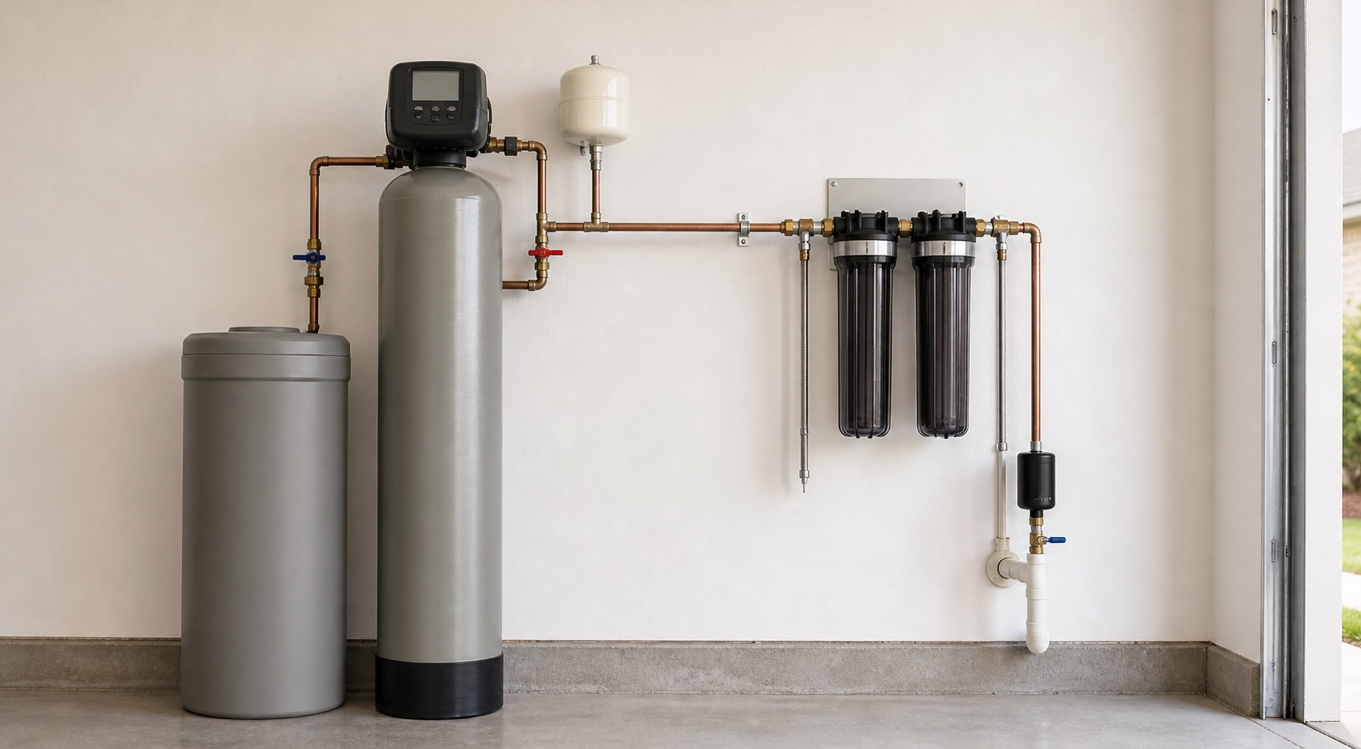
Hard water can be a persistent issue in many households, leading to scale buildup, reduced appliance efficiency, and less effective cleaning. For families facing these challenges, choosing between a water softener system and a traditional filter becomes essential. The decision is influenced by factors such as effectiveness, cost, and maintenance. This article will delve into the specifics of each option, helping you decide which solution is most suitable for your home.
Water Softener Systems Explained
Water Softener Systems are designed to remove hardness minerals, such as calcium and magnesium, from water through a process known as ion exchange. In this process, resin beads in the softener tank attract and hold onto these minerals, replacing them with sodium or potassium ions. This method effectively prevents scale buildup, improving the longevity and efficiency of home appliances.
For families concerned about the environmental impact, modern Water Softener Systems can be integrated with Eco-Friendly Building Materials. This integration ensures reduced water waste and energy consumption, aligning with sustainable living goals. Moreover, some systems can be connected with an Energy Management System (EMS), optimizing water usage patterns and contributing to energy savings.
According to a Water Softener Systems report, homes using water softeners experience a 30-40% reduction in energy bills due to improved appliance efficiency. This statistic showcases the practical benefits of investing in such systems.
Traditional Filters and Their Functionality
Traditional water filters, on the other hand, work by physically trapping contaminants using a barrier, often made from activated carbon or ceramic. These filters are effective in removing impurities like chlorine, sediment, and some heavy metals, but they are less effective in handling the specific minerals that cause water hardness.
For families prioritizing health, traditional filters can improve Indoor Air Quality (IAQ) by reducing chlorine levels in water, which can vaporize and contribute to poor air quality indoors. An IAQ Assessment can help identify areas where traditional filters might be beneficial.
However, if the primary concern is hard water, traditional filters might not provide the comprehensive solution that a water softener system does. Filters may need frequent replacement, leading to higher ongoing costs and maintenance efforts.
Comparing Effectiveness in Hard Water Treatment
When comparing the effectiveness of Water Softener Systems and traditional filters in treating hard water, the former often emerges as the superior choice. Water softeners directly address the minerals causing hardness, thus extending the lifespan of home appliances and reducing maintenance needs.
By contrast, traditional filters focus more on improving water taste and removing certain contaminants. While they do offer some benefits, they lack the capability to fully mitigate scale buildup caused by hard water minerals.
For families employing Universal Design Principles in home renovations, a water softener system can be seamlessly integrated, providing a comprehensive solution that enhances both functionality and aesthetic appeal without compromising on design.
Cost and Maintenance Considerations
The initial cost of installing a water softener system is typically higher than that of a traditional filter. However, the long-term savings on appliance maintenance and energy bills often justify the investment. Water softeners require periodic salt refills and occasional servicing, but these are generally less frequent and costly compared to the regular replacement of filter cartridges.
Traditional filters, while cheaper upfront, may incur more frequent maintenance costs. Some filters need monthly changes depending on water quality and usage, which can add up over time.
Moreover, families interested in Home Automation Protocol (HAP) can find water softeners that offer smart home integration capabilities, allowing for remote monitoring and management of water usage. This feature can further reduce costs by optimizing water and energy use.
Conclusion
For families dealing with hard water issues, Water Softener Systems provide a more effective and long-term solution compared to traditional filters. Although they require a higher initial investment, the benefits in appliance efficiency and reduced energy costs are significant. When considering cost, maintenance, and effectiveness, a water softener system is often the preferred choice for comprehensive hard water treatment and integration into a modern, eco-conscious home.
