

Few sports stories anywhere in the world match the trajectory of kabaddi — a game played in village courtyards across the Indian subcontinent for thousands of years that has been transformed within a single decade into a professionally organized, commercially broadcast, globally recognized sport without losing the essential character that made it meaningful in the first place. The combination of raw physical drama, tactical sophistication, and cultural rootedness that kabaddi possesses made it ideally suited to franchise cricket’s commercial template — and the Pro Kabaddi League’s application of that template has produced results that have surprised even the sport’s most optimistic advocates. Fans following kabaddi and Indian sport broadly can find dedicated coverage at https://db-bet.in/.
What Is Kabaddi: The Sport Explained
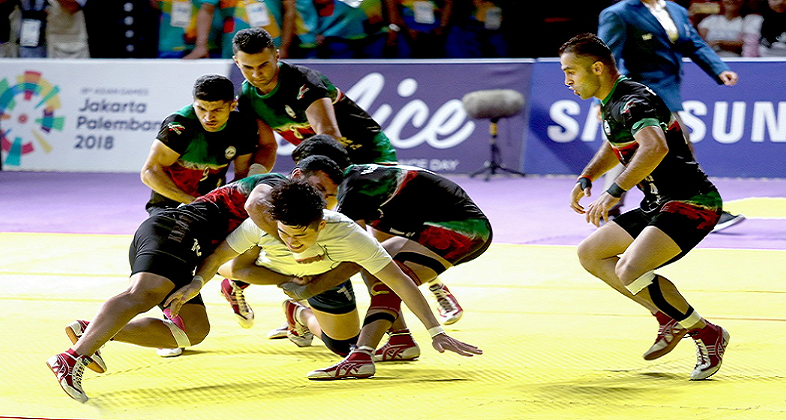
Kabaddi is a contact team sport played between two teams of seven players on a rectangular court divided into two halves. The fundamental competitive unit is the raid — a single player from the attacking team crosses into the opponent’s half, attempts to tag as many defenders as possible, and must return to their own half without being tackled to the ground. The raider must accomplish this while continuously chanting “kabaddi kabaddi” in a single breath — a rule whose origins lie in proving that the raider is not inhaling while in the opponents’ half, preventing any strategic pausing. The defending team attempts to tackle the raider and prevent their return. Tagged defenders are eliminated from play until revived by their team scoring points. The sport’s essential tension — one attacker against seven defenders in a confined space — creates the gladiatorial drama that makes it compelling to watch at any level of competition.
Ancient Roots: Where Kabaddi Comes From
Kabaddi’s origins are genuinely ancient — references to games with similar characteristics appear in texts that predate organized international sport by millennia. The sport’s development across different regions of the Indian subcontinent produced regional variations that still exist within the broader kabaddi family — Sanjeevani kabaddi in Maharashtra, Gaminee in South India, and Amar kabaddi in Punjab each reflect how the fundamental game adapted to local physical cultures and community preferences. The sport’s connection to martial arts training traditions — the raiding movement and defensive grappling requiring the same physical qualities that combat training developed — gave it cultural significance that pure recreational games rarely accumulate. By the time kabaddi was included in the Indian National Games in 1938 and the Asian Games in 1990, it was already carrying centuries of cultural weight that formal institutional recognition merely acknowledged rather than created.
The Asian Games and International Recognition
Kabaddi’s inclusion in the Asian Games from 1990 onward brought the sport into the international competition framework that creates the bilateral and multilateral rivalry structures around which sporting cultures develop. India’s dominance of Asian Games kabaddi — winning gold medals across multiple editions in both men’s and women’s competitions — reflected the depth of the Indian development system relative to nations whose kabaddi traditions were less comprehensively developed. The international competition structure also created incentive for other Asian nations to invest in kabaddi development — South Korea, Iran, Bangladesh, and Japan have all developed competitive programs whose challenge to Indian dominance has grown over subsequent Asian Games cycles. The Kabaddi World Cup — introducing teams from South Asia, East Asia, and increasingly beyond — has further extended the sport’s international competitive footprint in ways that the Asian Games alone could not achieve.
Pro Kabaddi League: The Franchise Revolution
The Pro Kabaddi League’s launch in 2014 represents the single most transformative commercial decision in kabaddi’s history — applying the IPL’s franchise model to a traditional indian sport and discovering that the combination of professional production quality, franchise team identity, and television broadcast could build a sports property whose viewership numbers genuinely surprised Indian television industry observers. The PKL’s first season viewership figures exceeded predictions dramatically — demonstrating that kabaddi possessed latent commercial appeal that lacked only the professional packaging to unlock it. The franchise model created city-based team identities — Patna Pirates, U Mumba, Jaipur Pink Panthers, Bengaluru Bulls — around which supporter communities formed with the specific attachment to local identity that franchise sport enables. The player auction system created stars whose names became recognizable beyond the kabaddi community into the broader Indian sports audience.
Traditional Sport and Modern Media: A Successful Marriage
The specific characteristics of kabaddi that make it a genuinely compelling traditional sport translate remarkably well to broadcast entertainment — a fact that the Pro Kabaddi League has demonstrated more convincingly than most observers anticipated before the first season aired. Individual raids — typically lasting ten to thirty seconds — provide the compressed dramatic unit that television production can package effectively with replays, slow motion, and statistical graphics that add analytical depth without obscuring the action’s visceral impact. The seven-on-one defensive structure creates visual clarity — the audience immediately understands the fundamental competitive dynamic of one person attempting to escape from seven — that sports whose rules require explanation before the drama registers cannot match. The physical contact involved produces the kind of athletic storytelling — the raider who breaks three tackles and escapes, the defender whose last-second ankle hold denies the point — that generates emotional responses from audiences regardless of their prior kabaddi knowledge.
The Players Who Made Kabaddi Famous
The PKL era has produced athletes whose names have transcended kabaddi’s traditional audience into mainstream Indian sporting consciousness — creating the individual star narratives that commercial sports properties require alongside team identity. Anup Kumar’s captaincy and raiding artistry during the league’s early seasons established the template for kabaddi stardom — combining competitive excellence with a playing style whose distinctiveness made him identifiable in highlight packages shared across social media. Pardeep Narwal’s raiding statistics — scoring points at rates that professional kabaddi had not previously seen — produced the record-breaking narrative that sports media require to create broader audience awareness of individual performers. Rahul Chaudhari’s consistency across multiple seasons demonstrated that sustained excellence rather than single spectacular performances was possible within the PKL’s competitive intensity. These players collectively created the human interest layer that makes sports commercially viable beyond pure competitive entertainment.
Women’s Kabaddi: A Parallel Development Story
Women’s kabaddi carries its own development story alongside the men’s game that the PKL’s commercial success has overshadowed without diminishing. India’s women’s kabaddi team has achieved consistent international success at Asian Games and Kabaddi World Cup level — maintaining the dominance that the men’s team established while operating with significantly less institutional and commercial support. The women’s game shares kabaddi’s fundamental athletic demands — the explosive raiding ability, the defensive strength and coordination, the breath control that the continuous chanting rule requires — while developing its own tactical traditions and playing styles that differ meaningfully from the men’s game. Commercial investment in women’s kabaddi — including discussions of a women’s Pro Kabaddi League — has been slower than advocates believe the women’s game’s competitive quality justifies, reflecting the broader challenge of commercializing women’s sport in India that disciplines beyond kabaddi also navigate.
Kabaddi’s International Expansion and Global Ambitions
The Kabaddi World Cup — expanding its field with each edition — represents the sport’s most ambitious attempt to establish itself beyond the South and East Asian markets where it has deep cultural roots. Nations including Argentina, United States, Canada, Australia, and several European countries have developed kabaddi communities through diaspora populations whose connection to Indian cultural traditions includes the sport alongside language, food, and religious practice. The specific challenge for kabaddi’s international expansion is moving from diaspora community sport — played within Indian, Pakistani, and Bangladeshi community organizations in Western cities — into the broader sporting culture of those countries. Sports that have achieved this transition successfully — cricket’s limited but genuine presence in the United States being the relevant example — demonstrate that diaspora community foundations can support broader expansion if the commercial and institutional investment follows the participation.
What Kabaddi’s Success Means for Indian Sport
Kabaddi’s commercial transformation carries implications for how Indian sport thinks about the relationship between traditional cultural practices and modern commercial sports properties. The Pro Kabaddi League demonstrated that a sport does not need to abandon its cultural identity to achieve commercial success — the PKL’s production quality and franchise structure amplified kabaddi’s inherent drama without replacing the fundamental game with something more palatable to international audiences. This model — bringing professional packaging to traditional forms rather than replacing tradition with globally familiar formats — offers a template for other Indian traditional sports seeking commercial development. Wrestling’s ongoing relationship with commercial organization, kho-kho’s recent franchise league launch, and the various regional martial arts forms whose advocates discuss commercial potential have all been influenced by the kabaddi story’s demonstration that the template is replicable beyond the specific sport where it was first successfully applied.
