

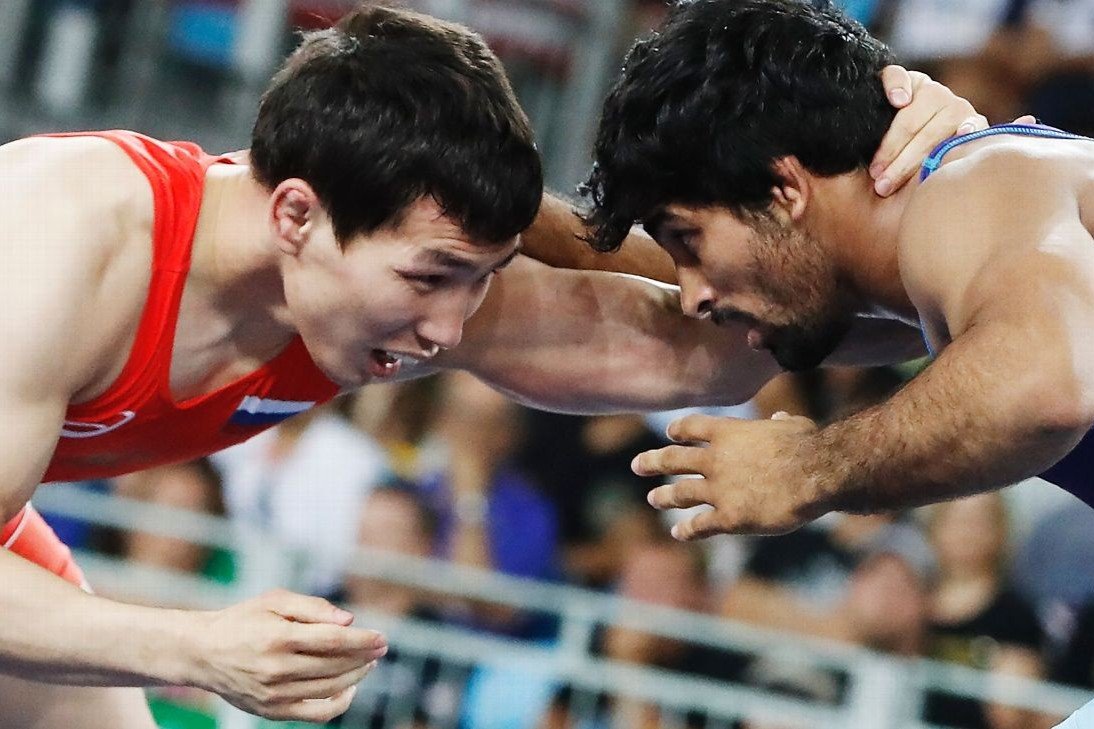
Some places produce champions with a consistency that defies statistical probability. Silicon Valley produces tech billionaires. Nashville produces country music stars. And Haryana produces wrestlers — generation after generation of athletes who climb onto international mats and compete with a ferocity, technical sophistication, and competitive hunger that has made this relatively small Indian state the undisputed heartland of one of the world’s oldest competitive disciplines.
db bet follows India wrestling development with genuine analytical investment, recognizing that understanding wrestling in haryana means understanding something fundamental about how sporting excellence emerges from cultural soil rather than manufactured institutional programs. The haryana olympic association’s role in channeling this raw cultural energy into systematic competitive development represents one of Indian sport’s most instructive ongoing stories.
The Cultural Roots of Haryana Wrestling
Wrestling in Haryana predates any formal sporting structure by centuries. The akhara — traditional wrestling gymnasium — has been the social centerpiece of Haryana villages for generations, providing young men with physical development, community belonging, and competitive identity in a cultural framework that treated wrestling not as sport but as dharma — righteous practice worthy of genuine life dedication.
These traditional institutions weren’t simply training venues. They were complete developmental environments combining physical conditioning, nutritional guidance through specific dietary traditions, mentorship from senior wrestlers, and the competitive culture that daily sparring with skilled opponents creates over years of dedicated practice. Young wrestlers entered akharas as children and emerged years later with physical and psychological foundations that formal coaching programs struggle to replicate at equivalent depth.
The specific cultural values Haryana attaches to wrestling — honor, strength, community pride, masculine virtue — create motivational frameworks that external competitive incentives alone cannot manufacture. When an entire village celebrates a wrestling champion as its most respected representative, and when that celebration has continued across centuries of unbroken tradition, the resulting talent pipeline produces athletes whose commitment levels exceed what purely commercial sporting incentives typically generate.
Geography and Physical Development
Haryana’s agricultural landscape has historically created physical development conditions that translate powerfully into wrestling excellence. Farming communities requiring genuine physical labor across daily life produced generations of young people whose foundational strength, work capacity, and physical resilience exceeded what urban populations with less physically demanding lifestyles developed through equivalent years of formal training.
The specific physical demands of traditional Haryana agriculture — lifting, pulling, sustained physical effort across long working days — built the grip strength, core stability, and functional power that wrestling demands at its highest competitive levels. Athletes arriving at formal training with this agricultural physical foundation required less time developing basic strength qualities, allowing coaching attention to focus on technical refinement and tactical development that physical conditioning work might otherwise consume.
This agricultural-athletic connection has weakened as Haryana modernizes and farming becomes less physically demanding. The systematic training programs that the haryana olympic association and state sports authorities have developed partly compensate for this transition — replacing informal physical development with structured conditioning programs that maintain the strength foundations previous generations built through daily labor.
Sushil Kumar: The Blueprint That Changed Everything
India wrestling’s modern transformation traces a clear lineage through Sushil Kumar — a Haryana wrestler whose Olympic achievements provided the most powerful possible validation of what the state’s wrestling culture could produce against international competition.
His Beijing 2008 bronze medal was India’s first wrestling Olympic medal in 56 years — a breakthrough that announced Haryana wrestling’s arrival on the global stage with unmistakable clarity. The 2012 London silver medal confirmed that Beijing wasn’t fortunate timing. And his 2010 World Championship gold — making him the first Indian wrestler to win world championship gold — demonstrated that Haryana’s wrestling culture could produce genuine world-class performers capable of defeating the international elite consistently rather than occasionally.
The impact on subsequent generations was immediate and measurable. Wrestling academies across Haryana reported surges in enrollment following each major Sushil achievement — young athletes who saw someone from their own cultural background competing and winning at the highest international levels deciding that wrestling offered realistic pathways to the recognition their communities already valued.
The Haryana Olympic Association: Systematic Development 🏛️
The haryana olympic association occupies a critical position within the state’s sporting ecosystem — providing the institutional framework that channels raw cultural wrestling talent into systematically developed competitive capability. Understanding the HOA’s role requires distinguishing between what traditional akhara culture provides and what modern institutional support adds to that foundation.
Traditional wrestling culture develops passion, foundational physical qualities, and competitive mentality with extraordinary effectiveness. What it historically couldn’t provide equivalently was exposure to international wrestling styles, scientific conditioning methodology, nutritional science, video analysis of international opponents, and the administrative infrastructure that manages international competition participation, qualification processes, and athlete welfare across complete career arcs.
The haryana olympic association bridges this gap — connecting traditional wrestling culture’s motivational and foundational strengths with modern sports science and institutional support that contemporary international competition requires. This integration of traditional and modern is precisely what makes Haryana’s wrestling program more than the sum of its cultural and institutional parts.
Women’s Wrestling: The Revolution 🌟
Perhaps no development in india wrestling has been more culturally significant than the emergence of Haryana’s women wrestlers as genuine international forces — athletes whose achievements challenge social assumptions while simultaneously demonstrating that the state’s wrestling culture contains resources that female athletes can access as completely as their male counterparts.
Vinesh Phogat and Bajrang Punia represent different aspects of this story. The Phogat family’s wrestling tradition — immortalized in the film Dangal — demonstrated that Haryana’s wrestling culture could produce world-class female wrestlers when given genuine developmental opportunity. Vinesh’s Commonwealth Games golds, Asian Games gold, and World Championship medals represent the competitive validation of what the cultural foundation plus serious development investment produces.
Training Infrastructure Across the State 🏋️
Haryana’s wrestling development infrastructure extends far beyond traditional akharas into modern training facilities that combine contemporary sports science with the competitive culture that traditional institutions built across centuries. Sports Authority of India centers, state government wrestling academies, and private training facilities collectively create a development ecosystem of genuine depth.
The Netaji Subhas National Institute of Sports in Patiala — just across Haryana’s border — has historically provided elite training environments that Haryana wrestlers access for national-level preparation. State-level facilities in Rohtak, Sonipat, and Hisar provide development environments that identify and refine talent before it reaches national training programs.
This infrastructure layering — village akharas feeding district competitions feeding state academies feeding national programs — creates the pipeline that sustainable wrestling excellence requires across complete development timelines rather than depending on exceptional individuals navigating development gaps through personal resources and determination alone.
India Wrestling at International Level 🥇
Haryana’s contribution to india wrestling’s international competitive position has been so dominant that the state’s wrestling culture has effectively become the national wrestling program’s cultural backbone. Medal tallies from Commonwealth Games, Asian Games, and Olympic competitions consistently show Haryana-origin wrestlers representing the substantial majority of India’s wrestling international achievements.
This concentration reflects the cultural foundation’s genuine depth rather than resource concentration alone. States with equivalent or greater government sports investment haven’t produced wrestling excellence at comparable rates — confirming that the cultural motivation, traditional developmental structures, and community competitive ecosystem that Haryana provides creates something that financial investment alone cannot replicate regardless of amount.
The Bajrang Punia story illustrates this perfectly. His rise from a small Haryana village through the akhara system into world championship medals and Olympic bronze reflects every element of Haryana’s wrestling development pipeline functioning as designed — cultural foundation, traditional training, institutional support, and international competitive exposure combining into a world-class athlete whose achievement validates the entire ecosystem.
Challenges and Evolution
Honest assessment of wrestling in haryana requires acknowledging the challenges and controversies that have accompanied the state’s wrestling success. The Sushil Kumar legal issues created a complex moment for Indian wrestling culture — forcing conversations about how exceptional athletic achievement relates to character development and institutional accountability that sporting success sometimes defers rather than resolves.
The national wrestling federation governance controversies that produced the extraordinary protest by India’s most celebrated female wrestlers demonstrated that institutional structures surrounding athletic excellence require the same developmental attention as competitive programs themselves. The haryana olympic association and related bodies face ongoing challenges ensuring that governance frameworks match the competitive sophistication that Haryana’s wrestlers demonstrate on international mats.
These institutional challenges don’t diminish Haryana wrestling’s cultural or competitive achievements — but they provide important context for understanding that sustainable sporting excellence requires organizational health alongside athletic development.
The Next Generation
The wrestlers currently training in Haryana’s akharas and academies represent the next chapter of a success story whose earlier chapters produced Olympic medals, world championships, and the transformation of India wrestling’s international reputation. Their development benefits from everything previous generations built — deeper institutional support, better scientific preparation, and the specific psychological advantage of believing that world-class wrestling achievement is normal for Haryana athletes rather than exceptional.
This normalized expectation of excellence is perhaps the most valuable inheritance the current generation receives. When young Haryana wrestlers grow up knowing that people from their villages, their akharas, and their cultural backgrounds win Olympic medals, the competitive ceiling they set for themselves rises accordingly — creating the self-fulfilling prophecy of excellence that the most successful sporting cultures sustain across generations.
