

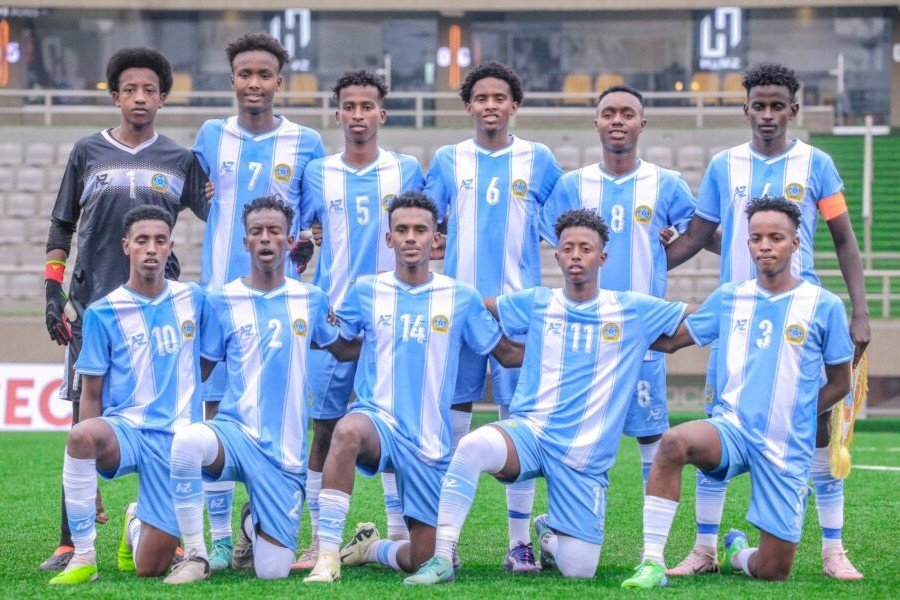
Somali football carries a weight that goes beyond sport. For a country that spent decades navigating conflict and instability, the national game represents something larger than competition — it is a signal of normalcy, institutional function, and collective identity reasserting itself. The Somalia Football Federation has rebuilt its structures from near-collapse, and the national team is now competing with genuine intent in continental qualification. Fans following Somali football and its growing regional presence can find dedicated markets and coverage at db bet.
Somalia Football: Where the Game Stands Today
Somalia football operates within one of the most challenging environments in African sport. Decades of civil conflict dismantled league structures, forced players abroad, and left federation administration in disarray for years. The recovery has been gradual but real. A domestic league now runs consistently in Mogadishu, the national team fulfills its FIFA and CAF qualification fixtures, and a generation of diaspora players — many raised in Europe and North America — has begun representing the country with genuine competitive intent. Somalia’s FIFA ranking remains outside the top 170, but the direction of travel has shifted. The infrastructure required to compete seriously is being assembled piece by piece, and each completed season represents institutional progress as much as sporting result.
The National Federation: Rebuilding from the Ground Up
The Somalia Football Federation — affiliated with both FIFA and CAF — has undergone significant governance reform over the past decade. International sanctions and internal disputes previously threatened the federation’s standing with global football authorities, but restructuring efforts have produced a more stable administrative base. FIFA Forward funding now reaches Somali football through proper institutional channels, financing grassroots programs, referee education, and facility improvements that were impossible during the conflict years. The federation runs national age-group championships, manages the domestic league calendar, and coordinates the national team’s preparation for qualification campaigns. Building governance credibility has been as important as building pitches — without institutional legitimacy, no other development effort holds.
African Championships: Somalia’s Continental Ambitions
Qualifying for the African championships — whether the Africa Cup of Nations or continental age-group tournaments — represents Somalia’s primary competitive target. The road is long. CAF’s qualification structure groups Somalia alongside established African football nations with deeper talent pools, superior facilities, and decades of continuous competitive experience. Somalia has not qualified for AFCON, but consistent participation in qualification has itself become a development tool — exposing players and coaching staff to standards that domestic competition alone cannot provide. Each qualification campaign delivers tactical education, physical benchmarking against stronger opponents, and broadcast exposure that raises the profile of the national program domestically. The ambition is not merely to participate but to progressively reduce the competitive gap with each cycle.
The Diaspora Factor: Players Returning to the Flag
One of Somalia football’s most significant recent developments is the systematic recruitment of diaspora players. Somali communities in Sweden, Norway, Finland, the United Kingdom, the United States, and Canada have produced footballers who grew up in professional youth academies and understand high-level training environments. Several have chosen to represent Somalia over the countries where they were raised, bringing technical quality and physical conditioning that transforms the national squad’s capability almost immediately. The integration of diaspora talent requires careful management — cultural adjustment, tactical familiarity, and squad chemistry all take time to develop. But the best examples demonstrate that when diaspora players commit fully, the effect on national team quality is rapid and measurable.
Domestic League Football: The Foundation of Development
No national team develops sustainably without a functioning domestic league beneath it, and Somalia’s league structure has made genuine progress in recent years. The Somali Premier League runs a full season of club football primarily centered on Mogadishu, with clubs like Elman FC and Horseed SC building recognizable identities and supporter bases. Security improvements in the capital have allowed matches to be staged with growing regularity, and broadcast coverage — even basic live streaming — has extended the league’s reach beyond the stadium. The challenge is expanding geographic coverage beyond Mogadishu into regional centers, creating a national league that reflects the country’s full territorial breadth rather than concentrating competitive football in a single city.
Youth Development: Building the Long-Term Pipeline
Somalia’s long-term competitive trajectory depends almost entirely on what happens at youth level over the next decade. The federation runs under-17 and under-20 national programs that feed into CAF age-group qualification campaigns. Grassroots participation has grown noticeably in Mogadishu and in relatively stable regional centers, with school football providing the first competitive exposure for thousands of young players. FIFA-funded coaching education programs have increased the number of qualified youth coaches operating across the country, though distribution remains heavily skewed toward the capital. The pipeline from grassroots participation to domestic league competition to national team selection is still fragile in places — but its basic structure now exists in a way it simply did not a decade ago.
Infrastructure: Pitches, Facilities, and Competitive Stadiums
Somalia’s sporting infrastructure remains among the most underdeveloped in African football. The Mogadishu Stadium — the country’s primary football venue — has undergone renovation with international support but still falls short of CAF requirements for hosting competitive international fixtures, forcing home qualification matches to neutral venues in neighboring countries. Artificial turf pitches installed through FIFA Forward funding have extended the training calendar and provided consistent surface quality in locations where grass maintenance is impractical. The gap between what Somalia currently has and what competitive African football requires is significant but not unbridgeable — other conflict-affected nations have rebuilt their infrastructure within a generation given sustained institutional commitment and continued international development support.
Women’s Football: An Emerging Conversation
Women’s football in Somalia faces challenges that go beyond the organizational — cultural and security barriers have historically limited female participation in sport significantly. Progress has been slow but not absent. The federation has taken initial steps toward establishing a women’s national program, and Somali diaspora communities in Scandinavia have produced female players of genuine quality who could represent the national team if a formal program develops sufficiently. CAF’s increased investment in women’s football across the continent creates external pressure and funding incentives for federations to develop female programs. Somalia’s women’s football story is at its earliest chapter, but the conversation is happening in ways it was not five years ago — and in this context, that itself represents meaningful forward movement.
What Competitive Progress Looks Like for Somalia
Realistic competitive benchmarks for Somali football over the next decade look different from those appropriate for established African nations. Consistent improvement in FIFA rankings, regular competitive performances across full qualification campaigns, and a domestic league that retains its best players rather than losing them entirely to overseas clubs represent meaningful and achievable targets. Qualifying for a single AFCON within the next fifteen years would represent a transformational achievement — not just for football but for Somali national identity. The countries that have made comparable journeys — Rwanda, Tanzania, Mozambique — demonstrate that rebuilding football in post-conflict environments is possible with sustained federation governance, grassroots investment, and the patience to measure progress across decades rather than individual tournament cycles.
