

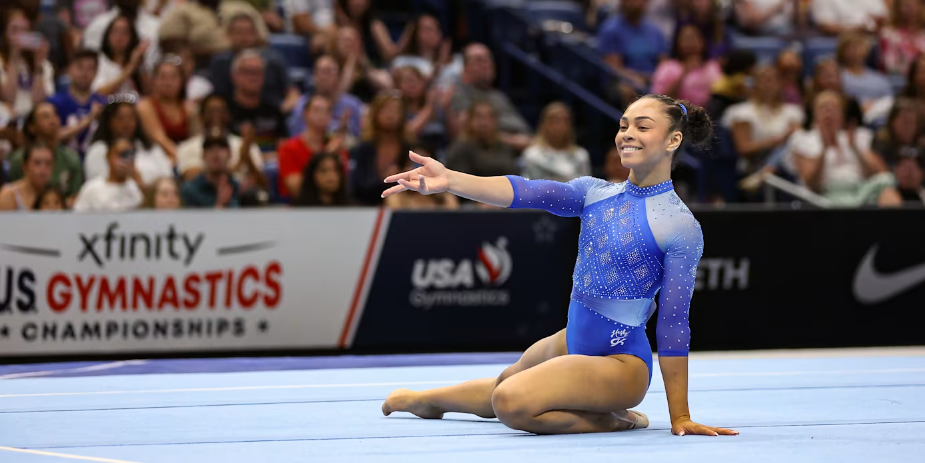
There are sports that impress. And then there are sports that genuinely stop people mid-conversation, demanding complete attention from anyone within viewing distance of a screen. Olympic gymnastics belongs firmly in the second category — a discipline where human physical capability reaches expressions so extraordinary that the gap between elite performance and ordinary physical experience feels genuinely unbridgeable.
db bet recognizes gymnastics as one of Olympic sport’s most compelling and culturally significant disciplines — attracting audiences far beyond dedicated sporting communities into mainstream cultural conversation during every Games cycle. Understanding olympic gymnastics structure, the teams that define contemporary competition, and the forces shaping the sport’s future provides essential context for appreciating what makes this discipline so persistently fascinating to global audiences.
What Gymnastics Actually Is
Gymnastics encompasses multiple distinct competitive disciplines that share foundational physical demands while producing radically different competitive experiences. Artistic gymnastics — the discipline most audiences associate with Olympic competition — involves apparatus-based routines evaluated by judges applying detailed technical criteria alongside aesthetic assessment.
The discipline’s physical demands are genuinely extraordinary. Elite gymnasts develop strength-to-weight ratios that exceed virtually every other athletic category. The explosive power required for vaulting, the sustained strength demands of rings and parallel bars, the spatial awareness required for tumbling passes — each element represents a distinct physical capability that elite gymnasts must develop simultaneously to compete at Olympic level.
Rhythmic gymnastics, trampoline, and acrobatic gymnastics complete the Olympic gymnastics family — each offering distinct competitive expressions of the foundational physical qualities that all gymnastics disciplines share while producing completely different viewing experiences for audiences approaching the sport from outside dedicated practitioner communities.
Artistic Gymnastics: The Event Structure 🤸
Olympic artistic gymnastics competition unfolds across multiple event formats that reward different combinations of apparatus specialization and all-around capability. Understanding this structure helps explain why gymnasts celebrated as the sport’s greatest practitioners don’t necessarily dominate every event simultaneously.
The team competition brings together national squads competing across multiple apparatus — men competing on floor exercise, pommel horse, rings, vault, parallel bars, and horizontal bar while women compete on vault, uneven bars, balance beam, and floor exercise. Team scores aggregate individual performances, creating collective stakes that individual competition cannot replicate — gymnasts performing not just for personal achievement but for teammates whose scores determine shared outcomes.
The individual all-around competition identifies the most complete gymnast in the world — the competitor who combines excellence across every apparatus into the most comprehensive single-competition performance. All-around champions occupy a special status within gymnastics culture, their titles reflecting breadth of excellence that event specialists cannot claim regardless of individual apparatus dominance.
Event finals — individual apparatus competitions featuring the highest-scoring qualifiers — provide the most specialized competitive expression, rewarding athletes who have developed single apparatus excellence to extraordinary levels even when all-around capability doesn’t match the sport’s most complete practitioners.
The Olympic Gymnastics Team Landscape
Contemporary olympic gymnastics team competition reflects a genuinely international competitive distribution that previous generations of the sport didn’t achieve equivalently. Traditional powerhouses maintain their competitive relevance while new nations have developed programs capable of genuine medal contention.
The United States women’s program has established sustained dominance across recent Olympic cycles that reflects systematic development investment, depth of talent across generations, and the specific competitive culture that American gymnastics has built around consistent elite performance expectations. The program’s depth — producing multiple genuine world-class gymnasts simultaneously rather than isolated individual excellence — represents the most reliable indicator of sustained competitive strength.
China’s gymnastics program combines extraordinary technical development infrastructure with competitive depth across both men’s and women’s programs — producing all-around contenders and event specialists simultaneously in ways that reflect the systematic athletic development approach applied consistently across Chinese Olympic sports programs.
Russia’s gymnastics tradition — now competing under modified international arrangements reflecting geopolitical circumstances — carries extraordinary historical depth in both artistic and rhythmic disciplines. The technical knowledge embedded in Russian gymnastics coaching represents decades of accumulated expertise that continues influencing global gymnastics development regardless of current competitive status arrangements.
Japan’s men’s gymnastics program has reasserted its historical excellence across recent Olympic cycles — combining extraordinary technical execution with the specific cultural emphasis on precision and consistency that Japanese gymnastics has historically represented at its highest levels.
Simone Biles: Redefining Possibility 🌟
Any honest examination of contemporary olympic gymnastics must engage seriously with Simone Biles — an athlete whose competitive achievements have genuinely expanded what observers believed human gymnastics performance could achieve at competitive level.
Skills bearing her name in the gymnastics Code of Points represent technical achievements so difficult that the sport’s own judging framework initially struggled to reward them proportionally — a problem unique to athletes whose difficulty ceiling exceeds what existing evaluation systems were designed to accommodate. That specific problem — a sport’s infrastructure insufficient for one athlete’s capabilities — has no meaningful parallel in Olympic sport history.
Her decision to prioritize mental health over competitive performance at the Tokyo Olympics generated global cultural conversation that extended far beyond gymnastics — contributing meaningfully to broader societal discussions about athletic mental health, performance pressure, and the responsibilities that sporting institutions bear toward the athletes within their care.
Her Paris 2024 competitive return demonstrated that the interruption hadn’t diminished her capabilities — producing performances that confirmed her position not just as gymnastics’ greatest contemporary practitioner but as a genuine candidate for the sport’s all-time greatest performer across its entire history.
Men’s Gymnastics: Different Stories, Equal Excellence
Men’s olympic gymnastics receives considerably less mainstream cultural attention than women’s competition despite producing athletic performances of equivalent extraordinary quality. This attention asymmetry reflects commercial and media dynamics rather than any genuine quality differential between the programs.
The men’s apparatus spectrum — particularly pommel horse and rings — demands strength and balance qualities that produce genuinely spectacular performances when executed at elite level. Pommel horse in particular represents perhaps gymnastics’ most technically demanding apparatus — requiring continuous movement across a narrow surface while maintaining form standards that tolerates almost no deviation from precise technical execution.
Men’s all-around competition generates its own compelling narratives — the pursuit of consistent excellence across six apparatus creating competitive storylines that reward sustained attention across complete competition programs rather than isolated highlight moments. Nations like Japan, China, and Great Britain have developed men’s programs producing genuine all-around contenders whose performances deserve far wider audiences than current mainstream coverage provides.
Judging: The Invisible Architecture
Gymnastics scoring operates through a system that combines objective difficulty assessment with subjective execution evaluation — creating a judging architecture that shapes competitive strategy, training priorities, and ultimately what elite gymnastics actually looks like in competition.
The Code of Points assigns specific difficulty values to individual skills and combination sequences — providing the D-score component that rewards technical ambition. Execution scoring deducts from a baseline for technical imperfections, form breaks, and landing errors — providing the E-score component that rewards precision and consistency.
This dual-component system creates genuine strategic tension — gymnasts and coaches deciding how much difficulty to attempt against how much execution quality can realistically be maintained. More difficult routines that execute imperfectly can score below simpler routines performed with exceptional precision — making difficulty-execution balance one of gymnastics’ most interesting ongoing strategic questions.
Rhythmic Gymnastics: The Other Olympic Discipline 🎀
Rhythmic gymnastics occupies a distinct space within the olympic gymnastics family — combining the physical demands of artistic gymnastics with apparatus manipulation, dance, and musical interpretation in ways that produce a genuinely different aesthetic and competitive experience.
The ribbon, ball, hoop, clubs, and rope provide the apparatus framework within which rhythmic gymnasts demonstrate extraordinary flexibility, coordination, and artistic expression simultaneously. The discipline’s judging rewards both technical apparatus manipulation quality and the artistic coherence that separates performances that merely execute skills from those that create genuine aesthetic experiences.
Russia and the former Soviet republics have historically dominated rhythmic gymnastics — the discipline’s cultural roots within Soviet sports systems creating coaching knowledge and competitive traditions that other national programs have spent decades attempting to close. Israel’s emergence as a genuine rhythmic gymnastics power — producing world and Olympic champions — represents the sport’s most significant recent competitive geography shift.
Youth Development and the Future Pipeline
Gymnastics faces a particular youth development challenge that few other Olympic sports navigate — the discipline’s elite competitive peak frequently occurring in athletes’ teenage years, creating development timelines that require extraordinary decisions about training intensity, academic balance, and long-term athlete welfare during particularly vulnerable developmental periods.
National programs approaching this challenge most responsibly are increasingly emphasizing long-term athlete development frameworks that prioritize sustainable training loads, comprehensive education alongside athletic development, and genuine athlete welfare monitoring that previous generations of gymnastics culture sometimes treated as secondary to competitive results.
The sport’s future competitive landscape will reflect which national programs most successfully balance ambitious competitive development with responsible athlete welfare — producing gymnasts who reach peak performance having developed sustainably rather than through approaches that generate early excellence at costs that manifest later in careers or post-competitive lives.
Gymnastics’ Global Footprint Expanding 🌍
Contemporary olympic gymnastics is developing genuine competitive depth in nations and regions that previous generations of the sport rarely produced Olympic-level performers. Brazil’s gymnastics development — symbolized by Arthur Zanetti’s rings gold at London 2012 and sustained program investment since — reflects how South American gymnastics is building genuine Olympic-level capability beyond isolated individual breakthrough moments.
African gymnastics development remains in earlier stages but shows genuine momentum — federation investment, international coaching exchanges, and individual breakthrough performances suggesting that the continent’s gymnastics competitive presence will grow meaningfully across coming Olympic cycles.
South Asian gymnastics, including Bangladesh’s developing program, represents exactly the kind of emerging market where foundational investment in youth development infrastructure could produce Olympic-level performers within realistic developmental timelines — given the physical qualities that South Asian athletic populations possess and the technical coaching knowledge now globally accessible through international federation development programs.
The Future of Olympic Gymnastics
Gymnastics enters its next development phase navigating genuine tensions between tradition and evolution — preserving the technical excellence and aesthetic values that define the sport’s identity while adapting to athlete welfare imperatives, commercial sustainability pressures, and audience development needs that the contemporary sporting landscape demands.
Judging system refinements, competition format experiments, and broadcast innovation are all being explored simultaneously — reflecting serious institutional engagement with questions about how gymnastics presents itself to audiences who encounter it primarily through Olympic coverage rather than sustained year-round following.
The athletes who will define the sport’s next chapter are currently working through development programs across multiple continents — building the strength, flexibility, and competitive resilience that Olympic gymnastics demands at its highest level. Their performances, when they arrive on the Olympic stage, will continue doing what gymnastics has always done — stopping conversations, demanding complete attention, and demonstrating human physical capability at its most extraordinary and inspiring expression.
